
Our Sentiment vs. The Market
Photo by Christian Waske on Unsplash
Don't look now, or maybe do since it's pretty cool, but the markets are back to incredible-returns-territory again.
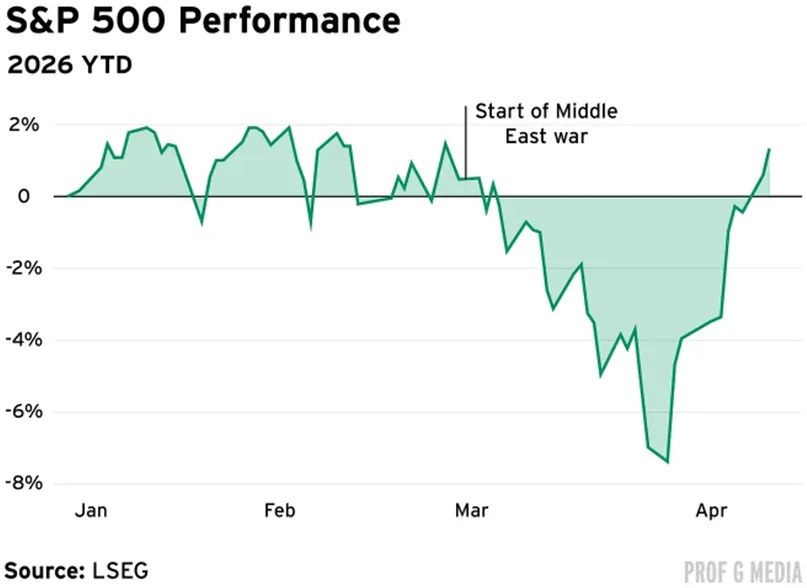
2025 finished off with some of the best returns in a decade, and after a few months of volatility in 2026, almost all areas of the market have recovered from their losses and are now hitting all-time highs again.
This chart captures what things have looked like since the beginning of the year.
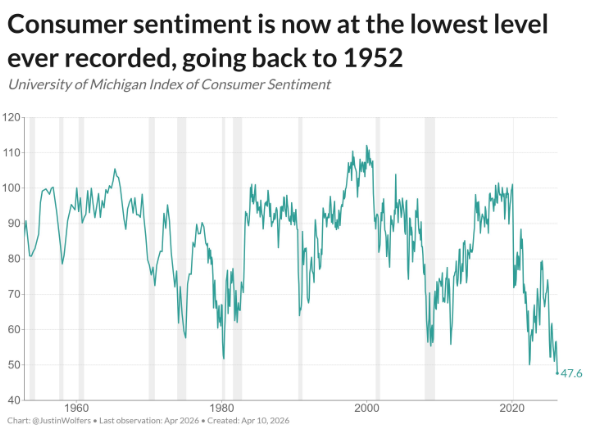
And yet, you might have noticed the general mood in our country does not reflect this; people aren't feeling good about things. Believe it or not, one well-known measure says we are currently facing the lowest consumer sentiment in 70 years.
The lowest it's ever been! At a time when the market is at all-time highs!
So how is this possible you may be wondering? Where's the disconnect? What's going on? I've had several clients ask similar questions and express concern about what's next.
So let's talk about it. Just you and me.
Our Sentiment = Bad
How can we be the most worried/saddest/uncertain we've been in 70 years?
It feels particularly crazy when we think back to all we've faced as a country, as a world, in the last 70 years.
Consumer sentiment is lower now than it was after 9/11.
Lower now than it was during the stagflation era of the 1970s.
Lower now than it was during the Great Financial Crisis or during the first global pandemic in a century.
Take a look at this chart that dates back to when the data began in 1952.
The Markets = Good
So why are the markets doing so well? As mentioned before, we are currently seeing all-time highs, and people are benefiting from amazing returns. Why? Well, I'd venture to say that it's primarily due to company earnings.
People keep spending money, so companies keep earning money. Companies keep earning money, so the prices of their stocks go up. Like a little economic merry-go-round.
The "stock market" is just a collection of companies, after all.
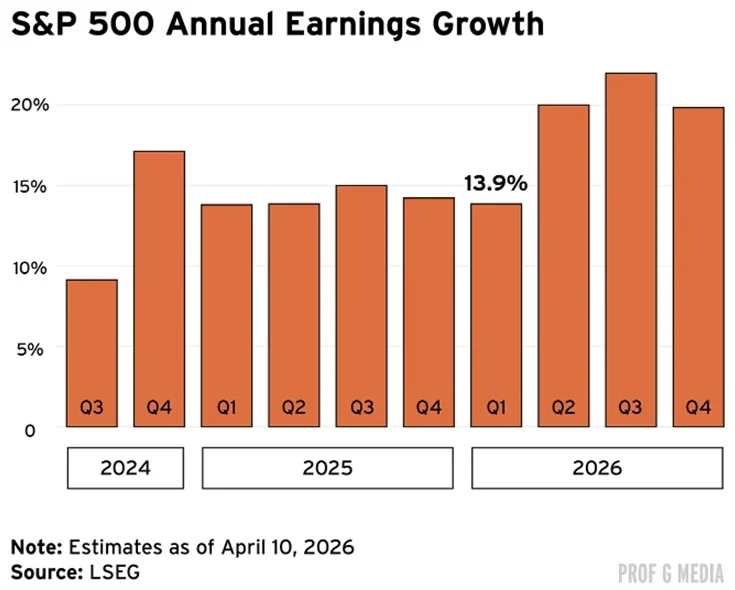
And despite all the headwinds in the world right now, i.e., the various global, geopolitical, and economic happenings, the great companies of the world continue to grow their profits. The S&P 500 is on track to record its sixth consecutive quarter of double-digit earnings growth, with strong earnings expected for the rest of the year as well. Check out this chart for a visual.
Good & bad at the same time??
So how can we be enjoying such good returns while also feeling so generally concerned about things?
One reason for the disconnect could be that not everyone is a participant in the stock market, which means many people aren't feeling the benefits of those gains.
That’s certainly true. But I think it's deeper than that. Many of us who are stock market investors aren't feeling great about things either.
I would argue that one distinct dynamic present now that hasn't been as present in the past (think about all those disasters of the last 70 years) is our near inability to escape the headlines. We are constantly exposed to and interact with a steady drumbeat of concerning headlines about war, tariffs, inflation, political dismay, high energy costs, etc.
Those are real concerns.
But the current disconnect is a reminder that consumer sentiment does not always follow the stock markets, and vice versa. They can be correlated, but not always.
In the end, money being spent is a major controlling factor of the stock markets. I think that John Mauldin, a financial expert and New York Times bestseller, summarized the current state pretty well:
"Even when consumers are in a foul mood, the data suggests they are still spending. I think it is more than just the economy that is driving that sentiment. It is pretty much the foul mood that seemed to pervade all of our media and political landscape. We are constantly barraged with negative “facts,” and see very little of the good, and after a while it just beats you down. It’s hard not to reflect the prevailing and currently overwhelming mood of the time."
So, what's next?
Ah, there's the question.
Should we be concerned about the stock market plummeting? Will consumer sentiment eventually catch up to the returns?
Who knows! Not me. And if someone claims to know, don't listen to them.
I think the current state of things is a great reminder that we're really bad (like really, really bad) at predicting things.
First of all, we're bad at predicting what will happen in the world.
But even if we get that right (and that's a big IF), we also need to then predict what the stock market will do (which we rarely get right).
And the confounding truth is that very often the stock market doesn't behave the way we think it will, given the state of the world.
A few positives
I think it's good for us to remember that, despite the barrage of negative news we hear, there's still a lot of good happening out there.
Here's an interesting example. New businesses are being formed at a really high rate right now, the highest rate in 20 years. Historically speaking, that has been a bullish sign. People don't tend to start businesses unless they are optimistic about their prospects. So that's an interesting indicator of optimism amidst the overall negative consumer sentiment.
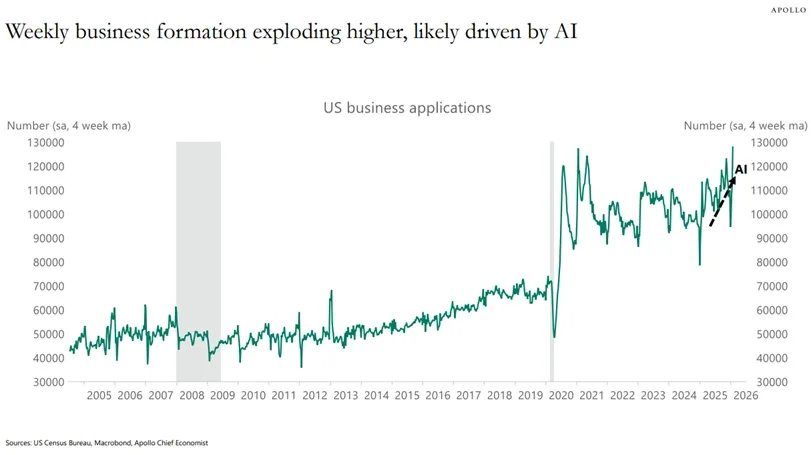
Another positive takeaway from today's situation is to remember that what's happening right now in many ways is not historically unique. Despite all the hand-wringing and headlines and consumer sentiment, the markets have continued to do what they have always done. Moved forward. And so have we.
Where do we go from here?
Like I said above, I have no special insight into what's next.
Are there reasons to be concerned? Absolutely. What's happening on a number of fronts, especially in the U.S. political arena, makes me sad and frankly nervous.
But are there reasons to be optimistic? Also absolutely yes.
My encouragement to us all is to remember that headlines only capture a moment in time. They show us what's going on in the moment, not necessarily over the long term. So therefore we should not let the headlines dictate our long-term financial strategy.
So my friends, let's stick to our old adage. Stay the course. Stay diversified. And lean on your long-term plan. Hang in there folks.